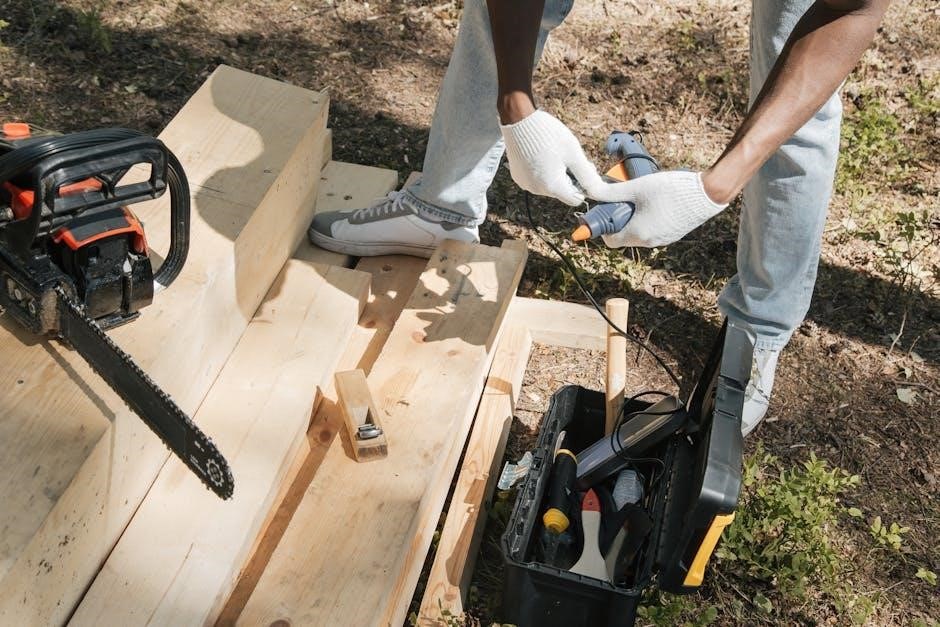
Echo CS-400 Chainsaw Manual: A Comprehensive Plan
This manual details safe operation, instructions, and maintenance for the ECHO CS-400 chainsaw. It includes safety symbols, and is crucial for understanding proper usage.
The ECHO CS-400 is a powerful and reliable chainsaw designed for both professional and homeowner use. This manual serves as a comprehensive guide to ensure safe and efficient operation of your chainsaw. Understanding its features and adhering to the provided instructions are paramount.
This model, manufactured by ECHO Inc. as of February 2016, boasts a robust engine and is intended for various cutting applications. Before operation, carefully read both the instruction and safety manuals. Proper use extends the chainsaw’s lifespan and minimizes potential hazards.
This guide will walk you through assembly, operation, maintenance, and troubleshooting, referencing part number X503-007851. Always consult your ECHO dealer for replacement manuals or further assistance.
Understanding the Manual’s Importance
This manual isn’t merely a set of instructions; it’s a critical resource for safe and effective operation of your ECHO CS-400 chainsaw. Ignoring its guidance can lead to serious injury, damage to the tool, or void the warranty.
The manual details crucial safety precautions, explains warning symbols, and outlines proper maintenance procedures. It’s essential to read and comprehend both the instruction manual and the separate safety manual provided by ECHO.
Familiarizing yourself with the components, controls, and operational procedures ensures optimal performance. Furthermore, understanding troubleshooting steps can save time and prevent costly repairs. Scan the QR codes for additional resources and support from ECHO;
Safety Precautions – General Chainsaw Safety
Operating a chainsaw demands utmost caution. Always read the safety manual thoroughly before use. Wear appropriate personal protective equipment (PPE), including a helmet, eye protection, hearing protection, gloves, and chainsaw chaps. Maintain a firm grip with both hands, ensuring a secure stance.
Be acutely aware of your surroundings, identifying potential hazards like overhead obstructions or uneven terrain. Never operate the chainsaw with one hand or attempt to reach beyond your comfortable range. Keep bystanders at a safe distance.
Inspect the chainsaw before each use, checking for loose parts or damage. Ensure the chain is properly tensioned and sharpened. Never modify the chainsaw or disable safety features.
Safety Symbols Explained
ECHO utilizes specific safety symbols throughout the CS-400 manual and on the chainsaw itself to alert operators to potential hazards. A triangle with an exclamation point signifies general warning, indicating caution and the need to review safety instructions. A symbol depicting a person wearing protective gear emphasizes the importance of PPE.
Symbols illustrating potential dangers, such as kickback or chain breakage, highlight specific risks associated with chainsaw operation. Understanding these symbols is crucial for preventing accidents. The manual provides a comprehensive key explaining each symbol’s meaning.
Pay close attention to symbols related to fuel handling and exhaust emissions. Ignoring these warnings can lead to fire hazards or health risks. Always refer to the manual for a complete interpretation of all safety symbols.
Important Safety Information
Always read both the instruction manual and the separate safety manual provided by ECHO before operating the CS-400 chainsaw. Thorough understanding of these documents is paramount for safe operation. Never operate the chainsaw without proper training and awareness of potential hazards.
Wear appropriate personal protective equipment (PPE), including a helmet, eye protection, hearing protection, gloves, and chainsaw chaps. Maintain a firm grip with both hands during operation. Be aware of your surroundings and potential obstacles.

Inspect the chainsaw before each use, checking for loose parts or damage. Never modify the chainsaw or use non-approved accessories. Proper maintenance, as outlined in the manual, is essential for continued safe operation.
Components and Controls
The ECHO CS-400 chainsaw features several key components for operation. These include the engine, guide bar, chain, throttle control, chain brake, and various safety features. Understanding each control’s function is vital.
The throttle control manages engine speed, while the chain brake provides immediate stopping power in emergencies. The guide bar supports the chain, and proper tensioning is crucial for efficient cutting. Familiarize yourself with the location of all controls before starting the chainsaw.
Refer to the manual for detailed diagrams identifying each part. Regular inspection of these components ensures optimal performance and safety. Knowing these controls enhances operational confidence.

Identifying Key Parts of the CS-400
The ECHO CS-400 chainsaw comprises several essential parts. These include the engine, serving as the power source, and the recoil starter for ignition. The fuel tank holds the fuel mixture, while the oil tank lubricates the chain and bar.
The guide bar supports the cutting chain, and the chain itself performs the cutting action. The chain brake lever immediately stops the chain, enhancing safety. The throttle trigger controls engine speed, and the on/off switch manages power.
Consult the manual’s diagrams for precise locations. Knowing each part’s function aids in maintenance and troubleshooting. Proper identification ensures safe and effective operation of your CS-400.
Throttle Control and Operation
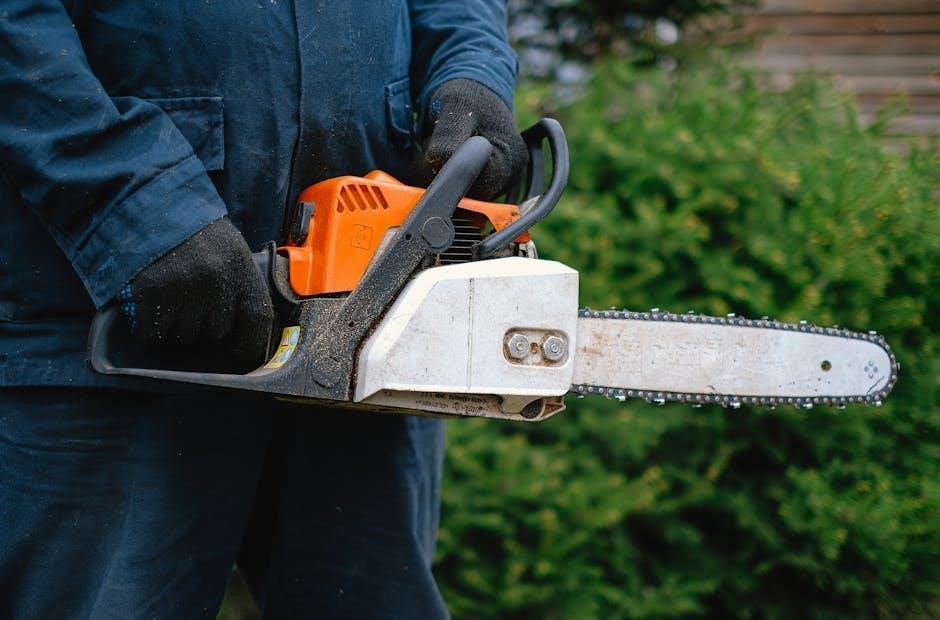
The ECHO CS-400’s throttle controls engine speed, directly impacting cutting power. The throttle trigger, located on the handle, regulates this speed. A slow idle is used for warm-up and idling, while pressing the trigger increases RPMs for cutting.
Always ensure the chain brake is engaged before starting. Gradually squeeze the throttle for controlled acceleration. Avoid sudden full-throttle engagement, which can cause kickback. The manual emphasizes smooth, progressive throttle control for optimal performance.
Release the throttle to return to idle. Familiarize yourself with the trigger’s responsiveness for safe and efficient operation. Proper throttle management is crucial for effective cutting and user safety.
Chain Brake Functionality
The ECHO CS-400 chainsaw features a crucial chain brake for operator safety. This mechanism instantly stops the chain’s rotation, minimizing kickback risk. Activation occurs through a hand guard, automatically engaging upon sufficient inertia or manually via the lever.
Before each use, verify the chain brake’s proper function. The manual stresses regular inspection and maintenance. A properly functioning brake is vital for preventing injuries. Ensure it engages smoothly and holds the chain securely.
Understand that the chain brake isn’t a substitute for safe operating practices. Always maintain a firm grip and proper stance. Familiarize yourself with its location and operation for immediate response in emergencies.
Chain Tensioning Mechanism
The ECHO CS-400 utilizes a tool-less chain tensioning system for convenient adjustments. Proper chain tension is critical for safe and efficient operation, preventing derailment and minimizing wear. The manual details how to adjust tension by loosening the bar nuts slightly, then using the tensioning screw.
Check tension frequently, especially during initial use and after chain sharpening. A correctly tensioned chain should be snug against the guide bar, with slight upward movement when lifted midway along its length.
Avoid over-tensioning, which can damage the sprocket and chain. Refer to the manual’s illustrations for precise guidance. Regular adjustments ensure optimal performance and prolong the life of your chainsaw.
Assembly Instructions

Before operating the ECHO CS-400, careful assembly is required, as detailed in the manual. This includes attaching the guide bar and installing the chain correctly. Ensure the chainsaw is switched off and the spark plug disconnected for safety during assembly.
The manual provides step-by-step illustrations showing how to position the bar and secure it with the bar nuts. Correct chain installation involves routing the chain around the bar and sprocket, ensuring proper direction. Adjust chain tension immediately after installation, following the manual’s guidance.

Always use genuine ECHO parts for optimal performance and safety. A properly assembled chainsaw is crucial for safe and efficient operation.
Attaching the Guide Bar
The ECHO CS-400 manual provides detailed instructions for securely attaching the guide bar. Begin by ensuring the chainsaw is powered off and the spark plug is disconnected for safety. Position the bar onto the chainsaw body, aligning the bar mounting studs with the corresponding holes in the bar.
Install the bar nuts, tightening them finger-tight initially. Ensure the bar’s oiler holes align with the oiler passage on the saw body. Gradually tighten the bar nuts, alternating between them to apply even pressure. Avoid over-tightening, as this can damage the bar or the saw.
Refer to the manual’s diagrams for correct bar orientation and nut placement. A properly attached guide bar is essential for safe and efficient cutting.
Installing the Chain
The ECHO CS-400 manual outlines the correct procedure for chain installation. With the guide bar attached, carefully place the chain around the bar and sprocket. Ensure the drive links of the chain engage properly with the sprocket teeth. Verify the chain’s cutting edges face in the correct direction – typically towards the direction of bar rotation.
Connect the chain by inserting the connecting link through the chain and securing it with the provided locking plate. Double-check that the connecting link is properly seated and locked. Refer to the manual’s illustrations for proper connecting link installation.
A correctly installed chain is vital for safe operation and optimal cutting performance.
Adjusting Chain Tension
The ECHO CS-400 manual emphasizes proper chain tension for safe and efficient operation. After installing the chain, loosen the bar nuts slightly. Use the tensioning screw to adjust the chain tension; the chain should be snug against the bar but still able to be pulled around by hand.
A correctly tensioned chain will exhibit minimal droop when lifted midway along the guide bar. Tighten the bar nuts securely once the correct tension is achieved. Regularly check chain tension, especially during initial use, as it can stretch.
Improper tension – too tight or too loose – can lead to premature wear, increased risk of kickback, and potential damage.
Sprocket and Bar Lubrication
The ECHO CS-400 manual stresses the importance of consistent bar and sprocket lubrication for prolonged chainsaw life and optimal performance. Utilize a high-quality bar and chain oil specifically designed for chainsaws. Ensure the oil reservoir is filled before each use, and regularly check the oil level during operation.
Proper lubrication minimizes friction, reducing wear on the bar, chain, and sprocket. The automatic oiler system delivers oil to the bar and chain while the saw is running. Inspect the oiler holes to ensure they aren’t clogged.
Insufficient lubrication can cause overheating and rapid wear, potentially leading to chain breakage or bar damage.
Operation Instructions
The ECHO CS-400 manual emphasizes reading all safety precautions before operation. Always ensure a firm grip with both hands, maintaining a balanced stance. Before starting, verify the chain brake is engaged and the surrounding area is clear of obstructions.
For a cold start, follow the priming and choke procedures detailed in the manual. A warm start requires less priming. Once started, disengage the chain brake cautiously. Proper cutting techniques, as outlined, prioritize control and avoid kickback.
Hold the chainsaw firmly, letting the chain do the work. Avoid forcing the cut. Regularly inspect the chain for sharpness and tension during use.
Starting the Chainsaw (Cold Start)
The ECHO CS-400 manual details a specific cold start procedure. First, ensure the chainsaw is on a flat, stable surface with the chain brake engaged. Prime the fuel bulb approximately 6-8 times until fuel is visible. Next, set the choke lever to the “closed” position.
Grip the front handle firmly with one hand and pull the starter cord with the other, using a smooth, controlled motion. Repeat this several times until the engine attempts to start. Once it sputters, move the choke lever to the “open” position and pull the starter cord again.
Continue pulling until the engine runs steadily.
Starting the Chainsaw (Warm Start)
The ECHO CS-400 manual outlines a simplified warm start process. With the chainsaw on a level surface and the chain brake engaged, bypass the priming step – do not prime the fuel bulb. Ensure the choke lever is in the “open” position.
Firmly grip the front handle and pull the starter cord smoothly. The engine, being warm, should ignite with fewer pulls than a cold start. If the engine doesn’t start after a few attempts, briefly engage the choke, then return it to the open position and try again.
Avoid excessive pulling, which can flood the engine.
Proper Cutting Techniques
The ECHO CS-400 manual emphasizes safe and efficient cutting. Always maintain a firm grip with both hands, keeping your body to the side of the cutting plane. Avoid pinching the bar, which can cause kickback. Use a narrow guide bar for felling smaller trees and a longer bar for larger diameter cuts.
Let the chain do the work; don’t force it. Begin cuts with the top of the bar, and be mindful of the chain’s rotation. When bucking logs, support the wood to prevent binding. Regularly inspect the chain for sharpness and proper tension, as dull chains increase the risk of accidents.
Felling Techniques and Safety
The ECHO CS-400 manual stresses extreme caution during felling. Assess the tree’s lean, wind direction, and surrounding obstacles before starting. Plan an escape route at a 45-degree angle from the anticipated fall line. Utilize proper notching and back-cutting techniques to control the tree’s direction.

Never fell a tree alone; always have a spotter. Be aware of spring poles and overhead hazards. Maintain a safe distance after the notch is cut, and communicate clearly with your partner. Ensure the chain is sharp and the saw is properly maintained for optimal control. Prioritize safety above all else during felling operations.
Maintenance and Troubleshooting
The ECHO CS-400 manual emphasizes regular maintenance for peak performance. Routinely clean the air filter to ensure proper engine function. Inspect and replace the spark plug as needed, following the specified gap. Maintain the fuel system by using fresh fuel and cleaning the filter. Sharpen the chain frequently for efficient cutting.
Troubleshooting common issues like hard starting often involves checking the spark plug, fuel lines, and air filter. If the chain stalls, verify proper chain tension and lubrication. Consult the manual for detailed diagrams and procedures. Regular upkeep extends the chainsaw’s lifespan and ensures safe operation.
Air Filter Cleaning and Replacement
The ECHO CS-400 manual stresses the importance of a clean air filter for optimal engine performance. Regularly inspect the filter for dirt and debris. For light dust, gently tap the filter to remove particles; avoid using compressed air, which can embed dirt.
When the filter is heavily soiled, wash it in mild soapy water, rinse thoroughly, and allow it to dry completely before reinstalling. The manual details replacement intervals, but more frequent cleaning is advised in dusty conditions. A clogged air filter restricts airflow, leading to reduced power and potential engine damage. Always use a genuine ECHO replacement filter.
Spark Plug Inspection and Replacement
The ECHO CS-400 manual highlights the need for periodic spark plug inspection. Check the plug for fouling, wear, or damage. A properly functioning spark plug ensures efficient combustion and easy starting. The manual specifies the correct spark plug type for your model – using an incorrect plug can cause engine problems.
To inspect, remove the plug and examine the electrode. If it’s excessively worn, carbon-fouled, or oily, replace it. Ensure the new plug is gapped correctly, as detailed in the manual. Proper gapping is crucial for optimal ignition. Always disconnect the spark plug wire before performing any maintenance.
Fuel System Maintenance
The ECHO CS-400 manual emphasizes regular fuel system maintenance for optimal performance. Always use fresh fuel mixed with the correct two-stroke oil ratio, as specified. Stale fuel can cause carburetor issues and engine damage. Periodically inspect the fuel lines for cracks or leaks, replacing them if necessary.
The manual details how to clean the fuel filter, preventing debris from clogging the carburetor. If the chainsaw runs poorly, the carburetor may require cleaning or adjustment. Refer to the manual for detailed carburetor servicing instructions. Always empty the fuel tank before extended storage to prevent fuel degradation.
Chain Sharpening Procedures
Maintaining a sharp chain is crucial for safe and efficient cutting with the ECHO CS-400. The manual details proper sharpening techniques, emphasizing the correct filing angle for the chain’s depth gauges and cutting edges. Use a round file of the appropriate size, guided by a file holder, to maintain consistent sharpening.
The manual illustrates how to determine the correct filing angle and demonstrates proper filing strokes. Avoid overheating the chain during sharpening, as this can reduce its hardness. Regularly check chain tension after sharpening. A dull chain requires more force, increasing kickback risk; therefore, frequent sharpening is vital for safety.
Technical Specifications
The ECHO CS-400 chainsaw manual provides detailed technical data for optimal performance and maintenance. Engine specifications include a 45.0cc displacement and a maximum power output, crucial for understanding its capabilities. Bar and chain specifications detail compatible lengths and pitch, ensuring proper operation.

Fuel mixture ratio is clearly stated – typically 50:1 (gasoline to 2-stroke oil) – for reliable engine function. Weight and dimensions are provided, aiding in handling and transport. These specifications, found within the manual, are essential for selecting appropriate accessories and understanding the chainsaw’s overall characteristics.
Engine Specifications (Displacement, Power)
The ECHO CS-400 chainsaw is powered by a robust 45.0cc two-stroke engine, detailed within the manual. This displacement contributes to its strong cutting performance. Maximum power output reaches 2.2 HP (1.6 kW), providing ample force for various tasks. The engine utilizes a stratified scavenging system for cleaner emissions and improved fuel efficiency.
Understanding these specifications is vital for proper fuel mixing and maintenance. The manual emphasizes using the correct fuel ratio to prevent engine damage. These engine details, clearly outlined, ensure users maximize the chainsaw’s power and longevity, contributing to safe and effective operation.
Bar and Chain Specifications
The ECHO CS-400 chainsaw is designed for use with a variety of bar lengths, commonly ranging from 16 to 20 inches, as detailed in the manual. The standard chain pitch is 3/8 inch, with a .050-inch gauge, ensuring efficient cutting performance. Proper chain selection and maintenance are crucial for safety and longevity.

The manual stresses the importance of matching the bar and chain to the task at hand. Using the correct specifications prevents premature wear and tear, and optimizes cutting speed. Regular inspection and sharpening, guided by the manual, are essential for maintaining peak performance and safe operation of the CS-400.
Fuel Mixture Ratio
The ECHO CS-400 chainsaw requires a precise fuel mixture to ensure optimal engine performance and prevent damage. The manual explicitly states a 50:1 ratio of high-quality, unleaded gasoline to ECHO PowerBlend™ 2-stroke oil, or an equivalent. This means 50 parts gasoline to 1 part oil.
Using the incorrect fuel mixture can lead to engine seizure, reduced power, and void the warranty. Always pre-mix the fuel in a clean container, ensuring thorough blending before adding it to the chainsaw’s fuel tank. The manual cautions against using automotive oil or fuel containing ethanol above 10%, as these can harm the engine.
Weight and Dimensions
Understanding the physical characteristics of the ECHO CS-400 chainsaw is vital for handling and transportation. The manual specifies a dry weight of approximately 9.9 lbs (4.5 kg) without a guide bar or chain installed. This relatively lightweight design contributes to maneuverability during operation.
Overall dimensions vary slightly depending on the bar length, but generally, the chainsaw measures around 37.4 inches (950 mm) in total length. The manual doesn’t provide precise width or height measurements, but the compact build facilitates use in confined spaces. Knowing these specifications aids in safe storage and transport, ensuring the chainsaw remains protected.
Warranty Information
ECHO provides a warranty on the CS-400 chainsaw, protecting against defects in materials and workmanship. The manual details specific warranty terms, typically covering a period of one year from the original purchase date for homeowner use. Commercial or professional use may have a reduced warranty period, often 90 days.
This warranty doesn’t cover items subject to normal wear and tear, such as the chain, bar, or air filter. Damage resulting from misuse, improper maintenance, or unauthorized repairs voids the warranty. To make a claim, retain your proof of purchase and contact an authorized ECHO dealer. The manual directs users to the ECHO website for complete warranty details.
Contacting Echo Customer Support
ECHO offers multiple avenues for customer support regarding the CS-400 chainsaw. The manual directs users to their website, www.echo-usa.com, for FAQs, downloadable resources, and a dealer locator. You can also reach ECHO customer service directly via phone during business hours; the manual provides the current contact number.
For assistance with parts inquiries or warranty claims, contacting your local authorized ECHO dealer is often the quickest route. The website’s dealer locator helps find nearby service centers. Additionally, many online forums and communities dedicated to chainsaws can offer peer-to-peer support and troubleshooting advice. Scan the QR codes in the manual for quick access to resources.
Locating Replacement Parts
Finding replacement parts for your ECHO CS-400 chainsaw is streamlined through several channels. Your local authorized ECHO dealer is the primary source, offering genuine ECHO parts and expert advice. The manual emphasizes using authentic parts to maintain performance and safety. ECHO’s website, www.echo-usa.com, features a parts finder tool, allowing you to identify components using the model number (CS-400).
Online retailers specializing in chainsaw parts also carry ECHO components. Always verify the part number against the manual’s parts diagram to ensure compatibility. The manual itself lists part numbers for common replacements. Keep your manual handy when ordering!
Manual Revision History
Tracking changes within the ECHO CS-400 chainsaw manual ensures users have the most current safety and operational information. While a detailed revision log isn’t explicitly provided in the snippets, ECHO routinely updates its documentation to reflect design modifications, safety standard revisions, and user feedback. The date of the manual, February 2016 (2/2016), indicates a specific point in time for the information contained within.
Replacement manuals are readily available from your ECHO dealer, suggesting updates are released periodically. Always refer to the latest version for accurate guidance. Checking the ECHO website (www.echo-usa.com) for downloadable manuals is recommended to confirm you possess the most recent iteration.
QR Code Information and Additional Resources
The ECHO CS-400 chainsaw manual leverages Quick Response (QR) codes to provide users with immediate access to supplementary information. Scanning these codes with a smartphone directs you to online resources, potentially including expanded safety manuals, instructional videos, frequently asked questions, and troubleshooting guides. This digital integration enhances the user experience and ensures access to the latest support materials.
For further assistance or to locate additional literature, contacting ECHO customer support is recommended. The manual also directs users to their ECHO dealer for replacement manuals and parts. Exploring the official ECHO website (www.echo-usa.com) unlocks a wealth of resources, solidifying comprehensive support.